


 /
/ 

Recombinant Carboxypeptidase B (CPB) is derived from rat pancreas and recombinantly expressed in Escherichia coli. With a molecular weight of approximately 33.8 kDa, it exhibits enzymatic properties identical to those of animal-derived carboxypeptidase B, yet contains no animal-derived components and is free from animal-derived viral contamination. It can serve as a replacement for animal-derived carboxypeptidase B in various biotechnological processes.
Carboxypeptidase B is a widely used Zn²⁺ metalloprotease, traditionally isolated from the pancreas of various animals. It specifically catalyzes the hydrolysis of basic amino acids, such as L-arginine and L-lysine, from the C-terminus of peptides and proteins. The activity of carboxypeptidase B is competitively inhibited by arginine and lysine, and its enzymatic activity is also suppressed by metal ion chelators such as EDTA.
Applications
(1)Determination of C-terminal amino acids of proteins.
(2)Production of recombinant insulin and its analogs.
(3)Production of other recombinant polypeptide substances.
Advantages
(1)High purity and high enzymatic activity.
(2)High digestion specificity with low batch-to-batch variation.
(3)No animal-derived raw materials, free from animal-derived contamination.
Information
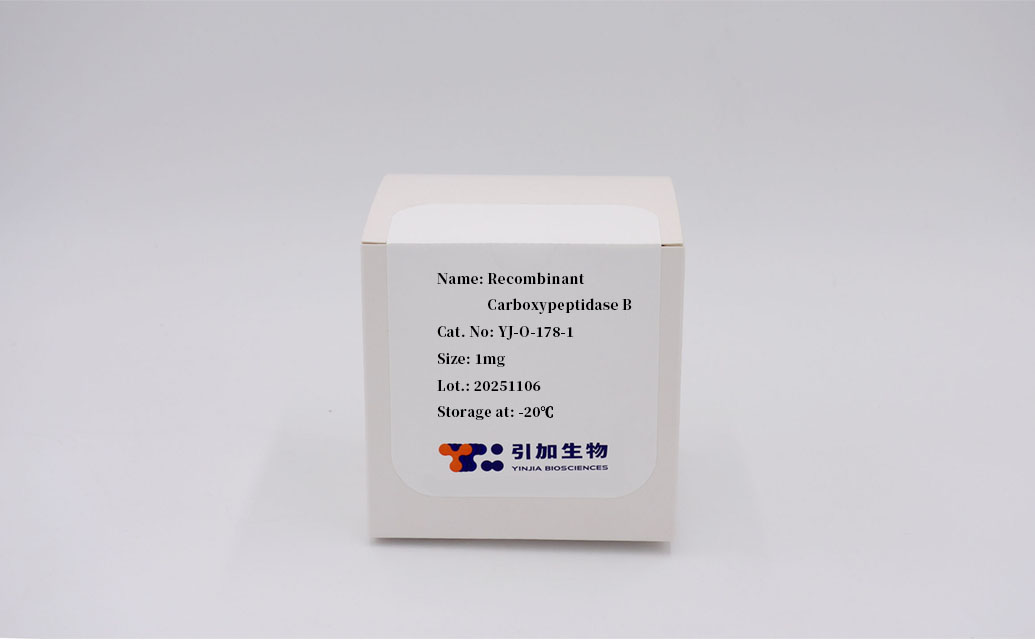
(1)Product Name: Recombinant Carboxypeptidase B
(2)Catalog No. : YJ-O-178
(3)Size: 1 mg / 10 mg
(4)Storage temperature: ≤ -20 °C