


Recently, Yinjia (Shanghai) Biosciences ("Yinjia Bio") and Intelligent Biosystem officially signed a strategic cooperation agreement in Shanghai.
The national "15th Five-Year Plan" has clearly identified biomanufacturing as a core track for future industries. One of the key development goals is to promote the deep integration of "AI + biomanufacturing", achieving accelerated breakthroughs in core areas such as gene function analysis, intelligent design of proteins and metabolic pathways, and shortening the R&D cycle from "years" to "months" or even "days".
As an innovative technology platform company driven by AI and focused on the wide application of high-end proteins in biomedicine and other major livelihood sectors, Yinjia Bio has rooted itself in its core business for many years and has made breakthrough progress in AI‑assisted protein design and cell‑free protein synthesis and expression validation. Using generative AI technology, researchers can generate novel protein sequences and structures from naturally occurring protein templates, achieving unprecedented improvements in the efficiency and capability of protein design. The company’s proprietary cell‑free protein synthesis technology completely bypasses the time‑consuming processes of cell cloning, transformation, and culture that take several days, enabling rapid, on‑demand synthesis of functional proteins directly from DNA templates in vitro. Moreover, the reaction system is fully open, allowing easy addition of non‑natural amino acids, fluorescent probes, or detection substrates, thereby seamlessly integrating synthesis and characterization.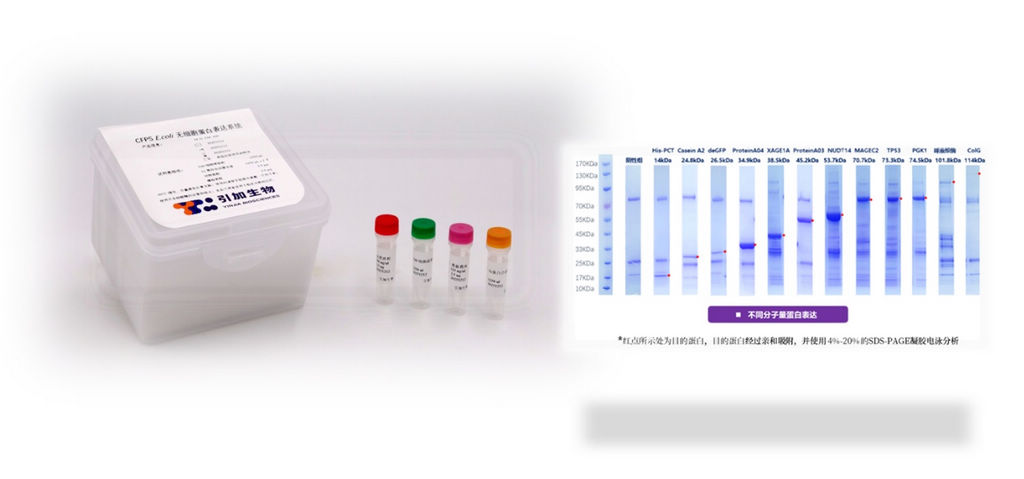
Yinjia Bio's self‑developed first‑generation CFPS E. coli cell‑free protein expression system enables rapid in vitro synthesis of various functional proteins with molecular weights exceeding 100 kDa directly from DNA templates. The reaction system is open and compatible with a variety of detection substrates.
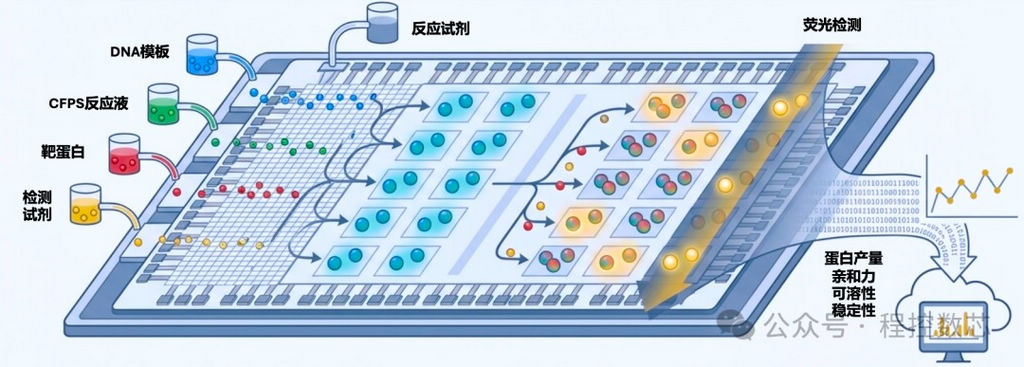
Today, AI can greatly improve the efficiency of biotechnology R&D, but the results of algorithms still need to be verified in the real physical world. High‑throughput, digital, and traceable biological experiments have become a bottleneck limiting AI‑driven biological research. Based on next‑generation digital microfluidic chip technology, Intelligent Biosystem has pioneered the "Bio‑chip Laboratory" – the Turing Universal Intelligent Bio‑Workstation, a programmable AI system. On a bio‑chip the size of a mobile phone screen, it achieves flexible, high‑throughput control of micro‑droplets (nanoliter to microliter scale) entirely under software control, overcoming the challenges of traditional manual‑dependent wet‑lab experiments, including high cost, low efficiency, and the inability to form a true digital closed loop.
Leveraging their respective technological advantages, the two teams conducted preliminary collaborative research. Using Intelligent Biosystem's Turing Intelligent Bio‑Workstation, Yinjia Bio successfully validated a high‑throughput, microscale cell‑free protein expression system on a digital microfluidic chip. Efficient expression of multiple novel proteins was achieved in a reaction volume as low as 0.5 μL. This revolutionary breakthrough not only significantly reduces the cost of protein synthesis but also greatly shortens the closed‑loop cycle of "AI‑assisted protein design → high‑throughput wet‑lab validation → complete multimodal data feedback → protein large‑model optimization and redesign", elevating AI‑assisted protein design and synthesis capabilities to an entirely new level.
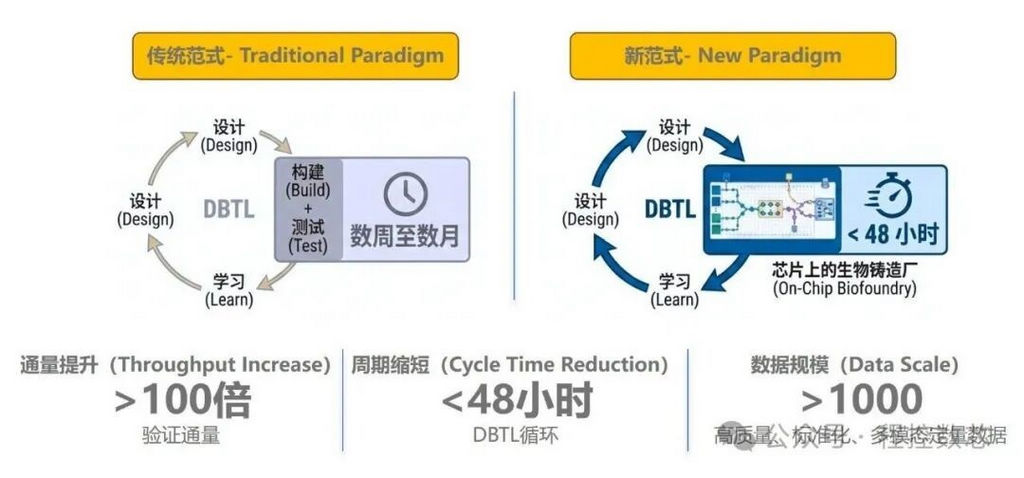
Based on these achievements, both parties agreed to sign a formal agreement to establish a long‑term, stable strategic partnership. They will fully leverage their respective resource advantages, conduct deep collaboration around AI‑assisted protein design and cell‑free protein synthesis systems, jointly create an industry‑leading paradigm for the design and synthesis of high‑end proteins with a dry‑wet closed loop, and achieve mutually beneficial development goals.
Looking ahead, the two parties are committed to jointly advancing a fully automated, intelligent, digital, and high‑throughput cell‑free protein synthesis validation system. Through large‑scale generation and automatic collection of multimodal experimental data, they will achieve a true complete dry‑wet experiment closed loop, continuously enhancing the capabilities of AI protein design models. In response to the national "15th Five‑Year Plan" for future industries, they aim to provide efficient, precise, and scalable protein engineering solutions for a broad range of fields that impact human welfare and public health, from innovative drugs to food processing improvement.
 Prev
Prev